24*7 Ambulance : +91 76187 37359   For Appointment Call : 0804 35 17700 , +91 7618 737 389 , 080 435 17 777


“Diabetes Doesn't Affect Just Your Blood Sugar:
What High Blood Sugar Can Do to Your Body Over Time"


Koshys Hospital

05-10-2026


Responsive image

When people hear “diabetes,” they often think of one number:

Blood sugar.

But diabetes is not only about what appears on a glucose meter.

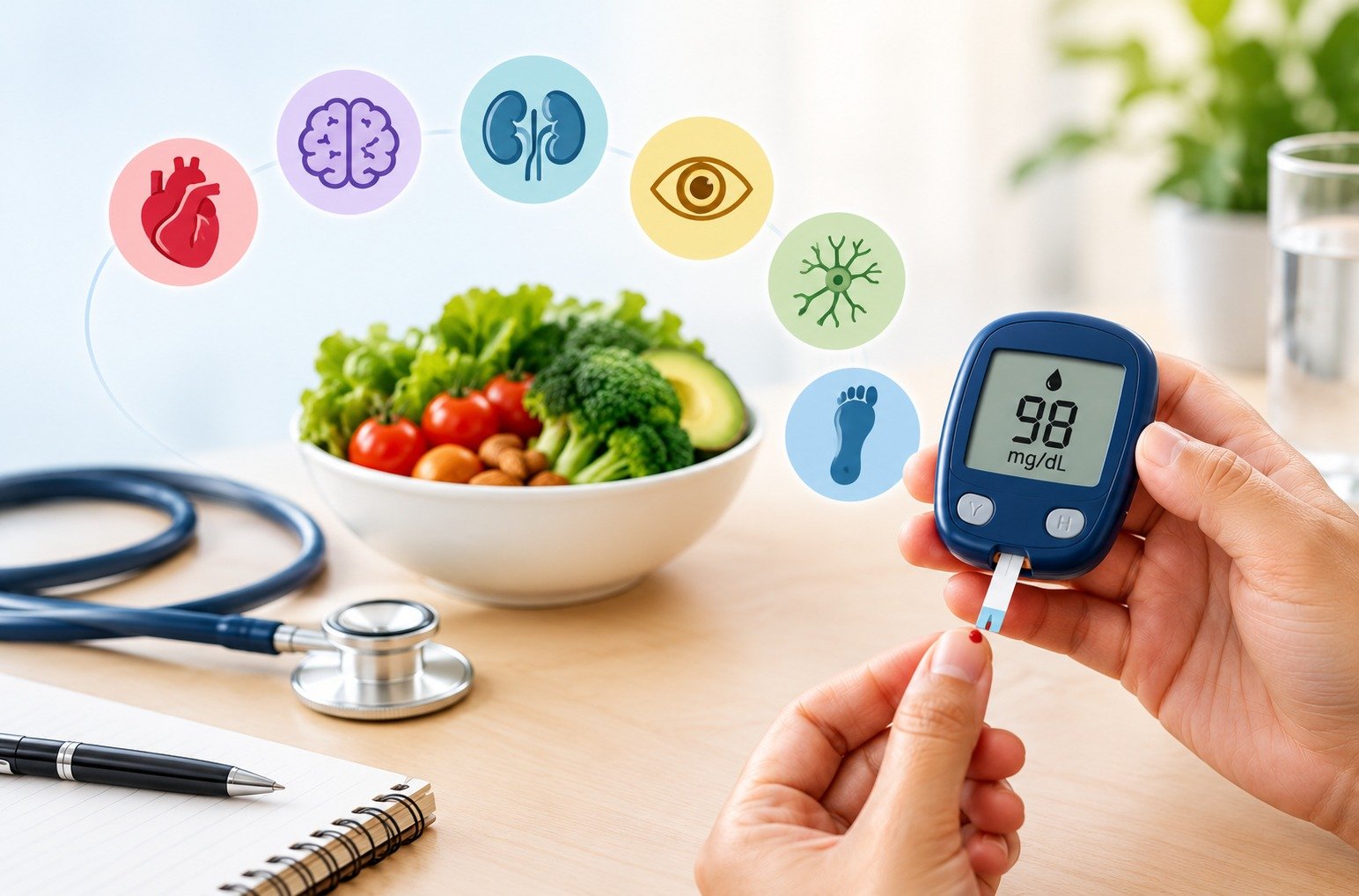
When blood glucose remains high over time, it can affect blood vessels, nerves and organs throughout the body. This can increase the risk of problems involving the heart, brain, kidneys, eyes, nerves and feet.

The good news?

Many diabetes-related complications can be prevented or delayed through appropriate management and regular healthcare.

Let's look at what diabetes can do—and what you can do about it.

1. Your Heart May Be at Risk

Diabetes is closely connected with cardiovascular health.

Over time, diabetes can contribute to blood-vessel damage and is associated with a higher risk of heart disease and stroke. High blood pressure and abnormal cholesterol can add to that risk.

That's why diabetes management shouldn't stop at checking glucose.

Your healthcare team may also monitor:

  • Blood pressure
  • Cholesterol
  • Kidney function
  • Weight and other cardiovascular risk factors

Think of diabetes care as protecting your entire cardiovascular system—not just your sugar reading.

2. Your Nerves Can Be Affected

Persistent high blood glucose can contribute to diabetic neuropathy, a type of nerve damage.

You may experience:

  • Tingling
  • Burning
  • Numbness
  • Pain
  • Reduced sensation in the feet or hands

The tricky part?

Nerve damage can sometimes reduce your ability to feel an injury.

That becomes particularly important when it comes to your feet.

3. Your Feet Need More Attention Than You Think

A tiny blister may not seem like a medical concern.

For someone with diabetes-related nerve damage, however, it may go unnoticed.

Diabetes can affect nerves and blood flow in the feet. This can make injuries easier to miss and wounds harder to heal.

Watch for:

  • Cuts
  • Blisters
  • Redness
  • Swelling
  • Warm areas
  • Changes in skin colour
  • New numbness or tingling
  • Sores
  • Ingrown toenails

Check your feet regularly—even if they feel completely normal.

If a cut, blister or sore isn't beginning to heal, or the foot becomes red, warm, swollen or painful, contact a healthcare professional promptly.

4. Your Eyes Can Be Affected

Diabetes can damage the small blood vessels in the retina, potentially leading to diabetic eye disease and vision problems.

Importantly, some diabetic eye conditions may develop before noticeable vision changes occur.

That is why people living with diabetes should discuss appropriate eye screening with their healthcare team rather than waiting until their vision becomes blurry.

5. Your Kidneys May Be Affected

Your kidneys continuously filter your blood.

Diabetes can damage the small blood vessels in the kidneys over time, increasing the risk of diabetic kidney disease.

Regular monitoring can help detect kidney problems earlier.

This is another reason diabetes care involves more than checking blood sugar at home.

6. Your Blood Pressure Matters Too

If you have diabetes, don't ignore your blood pressure.

High blood pressure can further increase the risk of damage to the heart, kidneys, brain and eyes.

So your diabetes check-up may involve more than:

“What was your sugar today?”

Your doctor may also ask:

“What is your blood pressure?”

“How is your cholesterol?”

“How are your kidneys?”

“Have you had your eyes checked?”

“Any numbness or foot problems?”

That's comprehensive diabetes care.

7. Infections and Wounds Can Become More Important

Diabetes can be associated with recurrent infections and slow-healing wounds.

This doesn't mean every infection is caused by diabetes. But frequent infections or wounds that aren't healing normally should be discussed with a healthcare professional.

8. Diabetes Can Affect More Than You Expect

Diabetes can also be associated with problems involving the mouth and gums, bladder and sexual health, as well as other conditions.

This is why an honest conversation with your doctor matters.

Some symptoms can feel embarrassing to discuss—but they may provide important clues about your health.

So, How Do You Protect Yourself?

The answer isn't:

“Never let your sugar rise even once.”

Blood glucose naturally changes.

The goal is appropriate long-term management based on your individual health needs.

That usually involves:

1. Monitor your blood glucose as advised

Know what your numbers mean and follow the monitoring schedule recommended for you.

2. Keep track of HbA1c

HbA1c provides an estimate of your average blood glucose over approximately three months and is an important tool for diabetes management.

3. Manage blood pressure

Blood pressure is an important part of reducing cardiovascular and kidney risk.

4. Pay attention to cholesterol

Diabetes and cardiovascular risk are closely connected, so cholesterol management may be part of your overall care plan.

5. Stay physically active

Regular physical activity can form an important part of diabetes management, with the appropriate activity depending on your health and individual circumstances.

6. Take medications exactly as prescribed

Don't stop or change medicines simply because your blood sugar improves.

7. Check your feet

A one-minute daily foot check can help you notice problems early.

8. Keep up with recommended screening

Ask your healthcare team about appropriate eye, kidney, nerve and foot checks.

“But I Feel Fine…”

This may be the most important message in this entire article.

Feeling fine does not necessarily mean diabetes is not affecting your body.

Type 2 diabetes can sometimes have few or no noticeable symptoms, while some complications can develop gradually.

That's why regular monitoring and preventive care matter even when you feel perfectly healthy.

The Good News: Diabetes Complications Are Not Inevitable

A diabetes diagnosis does not automatically mean that you will develop every complication discussed here.

Good diabetes management can help reduce the risk of many diabetes-related health problems.

The earlier problems are identified, the earlier appropriate medical care can begin.

So instead of asking:

“What will diabetes eventually do to me?”

ask:

“What can I do today to protect my health in the future?”

That is a much more useful question.

When Should You See a Doctor?

Don't wait for a routine appointment if you develop:

  • A foot wound that isn't healing
  • Redness, warmth or swelling around a wound
  • New or worsening numbness or tingling
  • Sudden or significant vision changes
  • Persistent unexplained fatigue
  • Recurrent infections
  • Symptoms of very high or very low blood sugar
  • Chest pain or symptoms suggesting a medical emergency

Some symptoms require urgent medical attention. If you experience a medical emergency, seek immediate emergency care.

Diabetes Care at Koshys Hospital

Koshys Hospital's Department of General Medicine provides management of diabetes and other lifestyle-related conditions, along with preventive care and health checks for adults at higher risk.

Koshys Hospital also has access to multiple specialties, supporting coordinated care when diabetes is accompanied by cardiovascular, neurological, kidney or other health concerns.

For patients requiring urgent care for serious diabetes complications, Koshys Hospital's critical-care service also addresses metabolic emergencies such as diabetic ketoacidosis (DKA) and hyperglycaemic hyperosmolar state (HHS).

Located in Ramamurthy Nagar, Bengaluru

Koshys Hospital
Thambu Chetty Palya Road, Raghavendra Nagar, Ramamurthy Nagar Extension, Ramamurthy Nagar, Bengaluru, Karnataka 560016.

The takeaway: Diabetes management isn't simply about lowering one number. It's about protecting your heart, brain, kidneys, eyes, nerves and feet—while helping you live your everyday life with confidence.

Medical information in this article is for awareness and does not replace personalised medical advice from a qualified healthcare professional.

Leave a comment

Comments
James Hmm, This Post looks good