24*7 Ambulance : +91 76187 37359   For Appointment Call : 0804 35 17700 , +91 7618 737 389 , 080 435 17 777


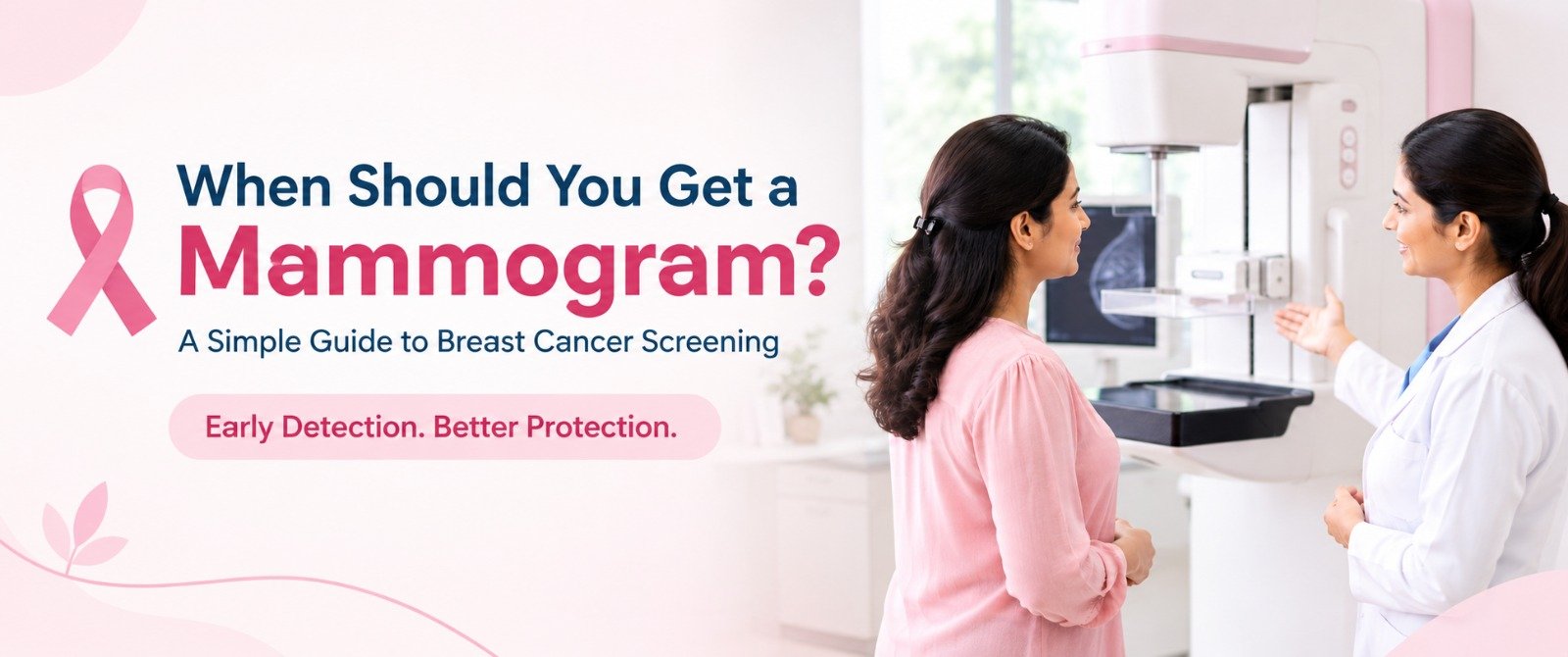
When Should You Get a Mammogram?
A Simple Guide to Breast Cancer Screening


Koshys Hospital

19-10-2026


Responsive image

Breast cancer is one of the most important health concerns affecting women, and early detection plays a significant role in improving outcomes. Yet many women have questions about breast cancer screening.

At what age should you get a mammogram? Is a mammogram necessary if you do not have any symptoms? Is breast ultrasound the same as mammography? And what should you do if breast cancer runs in your family?

Understanding the answers can help you make informed decisions about your breast health.

For women in Ramamurthy Nagar and surrounding areas of Bengaluru, knowing when to seek screening and where to obtain appropriate medical guidance is an important step towards proactive healthcare.

What Is Breast Cancer Screening?

Breast cancer screening refers to testing used to look for signs of breast cancer in people who do not have noticeable symptoms.

The most commonly used screening test is mammography, which uses low-dose X-rays to produce images of the breast.

A mammogram can sometimes detect abnormalities, including small cancers, before they can be felt as a lump or cause other noticeable symptoms.

Screening does not prevent breast cancer from developing. Its purpose is to help detect cancer earlier, when treatment may be more effective.

At What Age Should Women Get a Mammogram?

There is no single screening schedule that is appropriate for every woman. Recommendations vary according to the country's guidelines, age, personal medical history and individual risk.

Women in Their 20s and 30s

For women at average risk, routine mammography is generally not recommended at these ages in many screening guidelines.

However, women with a strong family history, certain inherited genetic variants or other significant risk factors may need earlier assessment and a personalised screening plan.

If you notice a new breast lump or another unusual change, do not wait until you reach a particular screening age to consult a doctor.

Women in Their 40s

Women in their 40s should discuss breast cancer screening with their healthcare professional.

Some guidelines recommend beginning regular mammography at age 40 for women at average risk, while recommendations can vary across healthcare systems.

This is also a useful time to discuss family history, individual risk and the potential benefits and limitations of screening.

Women Aged 50 and Above

Regular mammography is an important screening option for many women in this age group. The recommended frequency depends on the applicable guidelines, individual risk and discussions with a healthcare professional.

Women should not assume that screening is no longer necessary as they grow older. Decisions about continuing screening should consider overall health, life expectancy, personal preferences and medical advice.

Important: Women who have symptoms need diagnostic assessment rather than simply booking a routine screening test.

What Happens During a Mammogram?

Many women postpone mammography because they do not know what to expect. Understanding the process can help reduce uncertainty.

A typical mammogram involves the following steps:

Step 1: Registration and preparation

The imaging team will explain the procedure and ask relevant questions about your medical history, symptoms, previous breast imaging and any possibility of pregnancy.

Step 2: Positioning

A trained radiographer positions one breast at a time on the mammography machine.

Step 3: Breast imaging

The breast is gently compressed between two plates for a short period while the images are taken. Compression helps produce clearer images and reduce the radiation dose required.

Some women experience temporary discomfort, but the procedure is usually brief.

Step 4: Image review

The images are reviewed by a qualified radiologist, who looks for abnormalities that may require additional evaluation.

Step 5: Results and follow-up

You receive the results according to the imaging centre's process. If an abnormality is identified, additional imaging or other tests may be recommended.

An abnormal mammogram does not automatically mean cancer. Many findings turn out to be benign, but appropriate follow-up is essential.

Mammogram vs Breast Ultrasound: What Is the Difference?

Mammography and breast ultrasound are different imaging tests. Neither should automatically be considered a substitute for the other.

Mammogram

  • Uses low-dose X-rays to examine breast tissue
  • Is commonly used for breast cancer screening
  • Can identify certain abnormalities and calcium deposits that may not be felt during an examination
  • May be followed by additional imaging if a finding needs clarification

Breast Ultrasound

  • Uses sound waves rather than X-rays
  • Can help evaluate a breast lump or an abnormality found on a mammogram
  • Can help distinguish fluid-filled cysts from solid masses
  • May be useful in evaluating breast tissue in certain clinical situations

Ultrasound is often used alongside mammography when appropriate. It is not a universal replacement for mammography in routine breast cancer screening.

The right test depends on your symptoms, age, breast characteristics, medical history and the doctor's assessment.

Can You Get Breast Cancer Screening Without Any Symptoms?

Yes. In fact, screening is designed to detect possible breast cancer before noticeable symptoms develop.

However, screening is not perfect. A mammogram may miss some cancers, and it may also identify findings that require further investigation but are not cancerous.

If you notice a new lump, nipple discharge, skin changes or another concerning symptom, tell your doctor even if you recently had a normal mammogram.

What If Breast Cancer Runs in Your Family?

A family history of breast cancer can increase your risk, particularly when close relatives were diagnosed at a younger age or multiple relatives have had breast or certain related cancers.

Your doctor may ask about:

  • Which relatives were diagnosed
  • Their age at diagnosis
  • Whether there is a history of ovarian or other related cancers
  • Any known inherited genetic variants in the family

Depending on your history, you may benefit from genetic counselling, risk assessment, earlier screening or additional monitoring.

Having a family history does not mean you will definitely develop breast cancer. It means your screening plan may need to be tailored to your circumstances.

What Are the Benefits and Limitations of Mammography?

Benefits
Mammography can:

  • Detect some breast cancers before symptoms appear
  • Identify abnormalities that cannot be felt during a physical examination
  • Support earlier diagnosis and treatment
  • Help monitor certain breast conditions when clinically indicated

For eligible women, regular screening can reduce the risk of dying from breast cancer.

Limitations
Mammography also has limitations:

  • Some cancers may not be visible on a mammogram
  • False-positive findings may lead to additional tests and anxiety
  • Breast compression may cause temporary discomfort
  • Some cancers detected through screening might never have caused serious problems during a person's lifetime

These limitations do not make screening unnecessary. They highlight why screening decisions should be informed and individualised.

Can Lifestyle Changes Prevent Breast Cancer?

No lifestyle measure can guarantee that breast cancer will be prevented. However, certain habits may help reduce risk and support overall health.

These include:

  • Maintaining regular physical activity
  • Eating a balanced diet
  • Maintaining a healthy weight where possible
  • Avoiding tobacco
  • Limiting alcohol consumption or avoiding it
  • Discussing personal risk factors and hormone-related medicines with a healthcare professional when relevant

Lifestyle changes should complement, not replace, appropriate screening and medical advice.

Frequently Asked Questions

1. Is a mammogram painful?

Some women experience temporary discomfort due to breast compression. The experience varies, and compression is generally brief.

2. Can I get a mammogram if I have no breast lump?

Yes. Screening mammography is intended for people without noticeable symptoms who meet the relevant screening recommendations.

3. Is a mammogram safe?

Mammography uses a low dose of ionising radiation. For women who meet screening recommendations, the benefits generally outweigh the risks. Inform your healthcare team if you are pregnant or may be pregnant.

4. If my mammogram is normal, can I stop screening?

Not necessarily. A normal result is reassuring but does not rule out every breast cancer. Continue screening according to your recommended schedule, and seek medical advice if new symptoms develop.

5. Should women under 40 get a mammogram?

Not every woman under 40 needs routine mammography. However, symptoms or an increased risk may warrant earlier evaluation. The appropriate test and timing should be decided with a healthcare professional.

6. What happens if a mammogram shows an abnormality?

You may be advised to undergo additional mammographic views, ultrasound or, when indicated, a biopsy. Many abnormal screening results are not cancerous, but follow-up is important.

Looking for a Mammogram in Ramamurthy Nagar, Bengaluru?

Making time for breast health is an important part of preventive healthcare. Understanding when screening is appropriate, what the procedure involves and how to follow up on results can help you make informed decisions.

At Koshys Hospital, Ramamurthy Nagar, Bengaluru, women can enquire about mammography and relevant diagnostic services.

If you are considering breast cancer screening, have a family history of breast cancer or have noticed an unusual breast change, consult a qualified healthcare professional to determine the most appropriate next step.

Do not wait for a symptom to learn about breast health. Ask questions, understand your risk and take an informed approach to screening.

Koshys Hospital — Supporting informed decisions for better women's health.

Medical information in this article is for awareness and does not replace an individual consultation with a healthcare professional.

Leave a comment

Comments
James Hmm, This Post looks good