24*7 Ambulance : +91 76187 37359   For Appointment Call : 0804 35 17700 , +91 7618 737 389 , 080 435 17 777


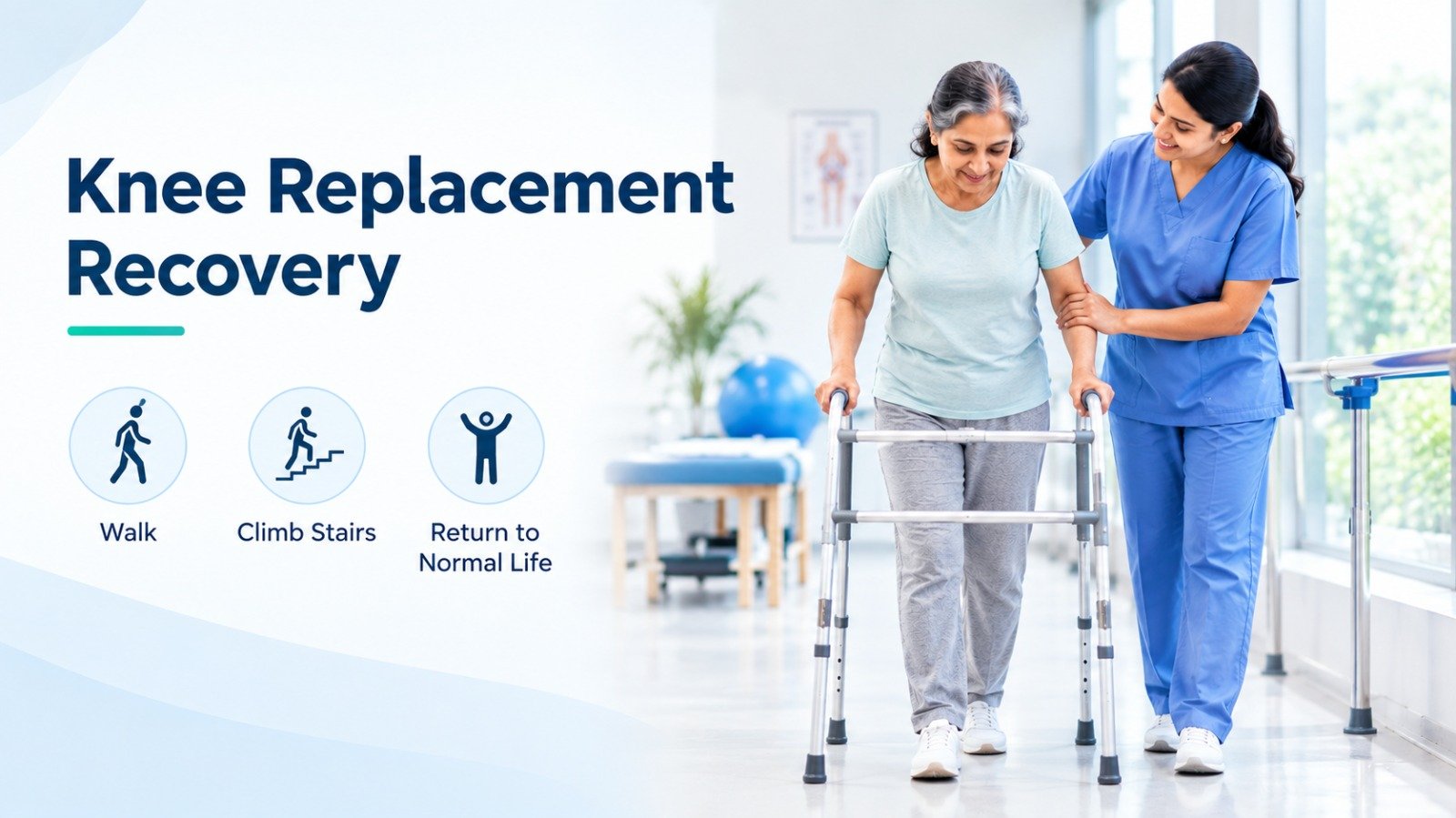
Knee Replacement Recovery: When Can You Walk,
Climb Stairs and Return to Normal Life?


Koshys Hospital

28-10-2026


Responsive image

One of the biggest concerns patients have before knee replacement surgery is what happens afterwards.

Will I be able to walk again comfortably? How soon can I climb stairs? When can I return to my daily routine? And how long will it take before my new knee feels normal?

These are important questions, especially if knee pain has already made everyday activities difficult.

Knee replacement surgery is intended to reduce pain and improve function in people with significant knee joint damage. However, recovery takes time, and progress varies from one person to another.

If you are considering knee replacement in Ramamurthy Nagar, understanding the recovery process can help you prepare for surgery with realistic expectations.

1. When Can You Start Walking After Knee Replacement?

Many patients are encouraged to begin standing and walking with assistance soon after surgery, often on the same day or within the first day, depending on their medical condition and the surgical team's protocol.

Initially, you may use a walker or another walking aid for support.

Your healthcare team will guide you on:

  • How to stand safely
  • How to walk with assistance
  • How to manage transfers between a bed and chair
  • How to begin appropriate knee movements
  • How to reduce the risk of falls

The aim is to begin safe movement at the right time rather than rush the process.

Your surgeon and rehabilitation team will determine what is appropriate for you.

2. How Long Does Knee Replacement Recovery Take?

There is no single recovery timeline that applies to every patient.

Some people regain independence in basic daily activities relatively quickly, while others need more time to improve their strength, flexibility and walking ability.

Recovery generally involves several stages.

The early stage: The focus is on pain management, safe movement, wound care and beginning appropriate exercises.

The following weeks: Patients gradually work towards improved knee movement, strength and walking ability.

The following months: Many continue making progress in endurance, balance and everyday activities.

Complete recovery can take several months, and some patients continue improving for a year or longer.

Your progress depends on factors such as your general health, the condition of your knee before surgery, muscle strength and adherence to your prescribed recovery plan.

3. When Can You Climb Stairs After Knee Replacement?

Climbing stairs is a common concern because knee pain may have made this activity difficult before surgery.

Patients often begin learning how to use stairs with assistance when their healthcare team considers it safe.

At first, you may need a handrail and walking aid, depending on your abilities and the advice provided by your physiotherapist or surgical team.

As recovery progresses, stair climbing may become easier.

However, the timing varies. Do not attempt stairs independently until you have been assessed and instructed in the appropriate technique.

4. Will Your Knee Feel Normal After Surgery?

Knee replacement can significantly reduce pain and improve everyday function for many patients.

However, a replaced knee may not feel exactly like a natural knee.

Some patients experience residual stiffness, mild discomfort or a different sensation around the joint as they recover.

The goal is to improve pain, mobility and quality of life, rather than promise a completely identical feeling to the original knee.

Your surgeon can explain what outcomes are realistic for your particular condition.

5. Why Is Physiotherapy Important After Knee Replacement?

Rehabilitation is an important component of knee replacement recovery.

Your prescribed programme may include exercises and activities designed to improve:

  • Knee flexibility
  • Muscle strength
  • Walking ability
  • Balance and stability
  • Independence in everyday activities

The programme is adjusted according to your progress and the instructions of your treating team.

Avoid comparing your recovery with another patient's experience. Two people undergoing the same operation can progress at different rates.

6. What Can Affect Recovery After Knee Replacement?

Several factors can influence how recovery progresses.

These include:

Your condition before surgery: Severe pain, stiffness or reduced mobility may affect how easily you resume activities.

Your overall health: Other medical conditions may influence healing and rehabilitation.

Muscle strength: Strength and mobility before surgery can affect functional recovery.

Pain management: Appropriate pain control can help you participate in prescribed movement and rehabilitation.

Following medical advice: Wound care, medication instructions, follow-up appointments and prescribed exercises are important parts of recovery.

Your orthopaedic team will help you understand which factors are particularly relevant to you.

7. What Precautions Should You Take After Knee Replacement?

Your surgeon will provide instructions based on your procedure and medical needs.

General precautions may include:

  • Use walking aids as recommended
  • Follow your prescribed exercise programme
  • Keep the surgical wound clean and follow wound-care instructions
  • Take medicines as directed
  • Attend scheduled follow-up appointments
  • Avoid activities your surgical team has advised against
  • Make your home safer by reducing fall hazards

Contact your healthcare team if you have concerns about your recovery.

Seek prompt medical assessment if you develop fever, increasing wound redness or discharge, worsening pain or swelling, or new calf pain or swelling. Sudden breathlessness or chest pain requires emergency medical attention.

8. How Long Does a Knee Replacement Last?

Modern knee replacement implants are designed to last for many years, although their lifespan varies.

Longevity can depend on implant design, surgical factors, activity levels, overall health and wear over time.

Regular follow-up and seeking advice when new symptoms develop can help your orthopaedic team monitor the joint.

Knee replacement is a major decision, so discuss expected benefits, risks and long-term considerations with your surgeon before proceeding.

9. Is Robotic Knee Replacement Better for Recovery?

Robotic-assisted knee replacement uses technology to help the surgeon plan and guide aspects of the procedure.

The robot does not independently perform the operation. The surgeon remains responsible for the surgical decisions and procedure.

Whether robotic-assisted surgery is suitable depends on your knee condition, anatomy, available technology and the surgeon's assessment.

It is important to understand that robotic assistance does not guarantee faster recovery or better results for every patient.

Discuss the potential benefits, limitations and alternatives with your orthopaedic surgeon.

When Should You Consider Knee Replacement?

Knee replacement may be considered when severe arthritis or other joint damage causes persistent pain and significantly affects mobility despite appropriate non-surgical treatment.

You may benefit from an orthopaedic assessment if you experience:

  • Persistent knee pain
  • Difficulty walking or climbing stairs
  • Significant stiffness
  • Pain that interferes with sleep
  • Difficulty performing everyday activities
  • Limited improvement with appropriate treatment

Not everyone with knee arthritis needs surgery. A thorough evaluation can help determine whether knee replacement or another treatment is appropriate.

Looking for Knee Replacement in Ramamurthy Nagar?

If you are searching for a knee replacement hospital in Ramamurthy Nagar, Koshys Hospital in Raghavendra Nagar, Ramamurthy Nagar, Bengaluru, provides orthopaedic evaluation and care for knee and joint conditions.

The orthopaedic team can assess your symptoms, discuss available treatment options and explain what to expect if surgery is recommended.

Before making a decision, ask questions about the procedure, recovery, potential complications and rehabilitation.

Understanding the complete treatment journey can help you prepare more confidently.

Take the First Step Towards Better Mobility

Living with severe knee pain can affect much more than walking. It can influence your independence, daily routine and quality of life.

Knee replacement may help suitable patients regain mobility and perform everyday activities with less pain, but recovery requires time, appropriate care and realistic expectations.

If knee pain is limiting your life, do not assume that surgery is your only option — or that you must continue living with the pain.

Get your knee evaluated, understand your treatment choices and make an informed decision with your orthopaedic specialist.

Koshys Hospital — Comprehensive Orthopaedic Care in Ramamurthy Nagar, Bengaluru.

Medical information in this article is for awareness and does not replace an individual consultation with a healthcare professional.

Leave a comment

Comments
James Hmm, This Post looks good